






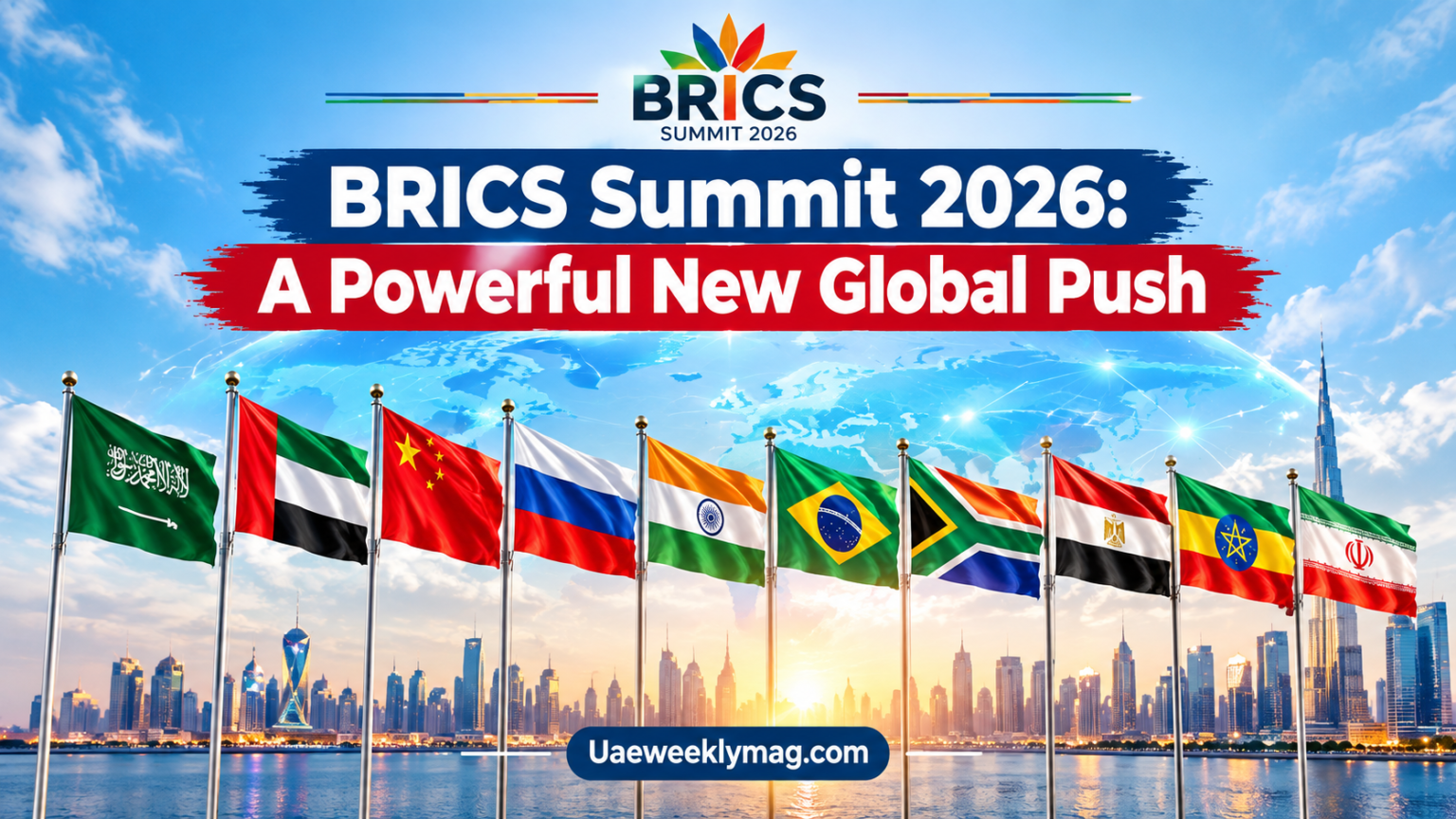
The BRICS Summit 2026 is set to begin in New Delhi, bringing together leaders from many nations. This special two-day event focuses on strengthening cooperation among BRICS countries and increasing the influence of the Global South in world decision-making.
This year’s summit is being held under the theme “Building for Resilience, Innovation, Cooperation and Sustainability.” It also marks a special milestone, since BRICS is celebrating 20 years since it first began in 2006.
What Is Happening at the Summit
This year’s summit is more than just a meeting about trade and money. Leaders are also expected to talk about reforming global organizations so that developing countries have a stronger voice in important decisions.
Other major topics include fighting terrorism, digital technology, clean energy, and sustainable development. Leaders will also discuss important regional and global events happening around the world.
To prepare for this big event, more than 350 meetings and smaller events took place earlier this year across many cities in India. These meetings focused on three main areas: political and security matters, economic cooperation, and cultural exchange between countries.
A Bigger Group Than Ever Before
The BRICS Summit 2026 also celebrates how much the group has grown. BRICS originally started with only five countries: Brazil, Russia, India, China, and South Africa.
Since then, several new countries have joined. Egypt, Ethiopia, Iran, Saudi Arabia, and the UAE became members in 2024. Indonesia joined the following year. This brings the total number of full BRICS members to 11 countries.
This growth means BRICS now includes major energy producers, important trade hubs, and countries with strong industries. Together, these 11 countries represent about half of the world’s population and nearly one-third of global economic output.
Why BRICS Matters More Than Before
According to experts, BRICS is no longer important simply because of how big its economies are. Instead, its real value comes from its ability to build a more balanced economic network among developing countries.
One expert explained that BRICS’ significance lies in creating stronger and more diverse financial connections between Global South nations. This means countries can rely less on a small number of markets or currencies.
As global trade faces more disruptions and challenges, this kind of cooperation is becoming increasingly valuable for many nations.
Trade and Economic Cooperation Grows
Experts expect trade, energy, technology, and supply chains to be major topics during this year’s summit. This reflects how BRICS is shifting from mostly political conversations toward real economic action.
For developing countries, closer cooperation through BRICS could open up new opportunities for trade, investment, and funding. This could help reduce dependence on a limited number of financial systems or markets.
As global risks and rising costs continue to affect economies worldwide, this kind of cooperation has become even more important.
If you would like to explore more global economic stories, check out our global trade news section and our emerging markets updates for more helpful reading.
You can also learn more from the official BRICS 2026 summit website for detailed updates on this year’s events.
Key Areas for Future Cooperation
Several important sectors are expected to benefit from deeper cooperation among BRICS nations. These include energy, strategic minerals, technology, digital finance, and infrastructure.
Energy cooperation could help connect countries that produce energy with those that need it. Strategic minerals are also becoming more important because they are used in electric vehicles, batteries, and renewable energy technology.
Digital finance is another growing area of interest. Discussions include expanding the use of local currencies and improving digital payment systems between countries. These steps could make international trade faster and less expensive.
Experts believe BRICS could eventually become an important center for reshaping global supply chains, especially in energy and mineral resources.
Working Together Is Not Always Easy
Even with all this growth, BRICS faces real challenges. Member countries differ greatly in the size of their economies, income levels, and political priorities.
Some members even compete directly with each other in certain industries. This makes it harder for the group to reach agreement on sensitive topics like currency policy and international trade rules.
Because of these differences, some experts say that the idea of creating a single BRICS currency to replace other major currencies is still unlikely in the near future. Instead, a more realistic step would involve expanding the use of local currencies and improving financial cooperation between member countries.
What Success Will Really Depend On
Experts describe this moment as a historic opportunity for BRICS, but they also note that the group has not yet become a fully unified economic power.
Instead, BRICS represents an ambitious effort to spread economic influence more evenly around the world. Its future success will depend on whether member countries can turn their combined strength into real trade growth, shared financing, and useful projects in energy, technology, and infrastructure.
The true test for the BRICS Summit 2026 is not simply how many countries are part of the group. It is about what these countries can actually build and achieve together in the years ahead.
Final Thoughts on This Global Gathering
The BRICS Summit 2026 highlights how the group continues to grow in size and importance. With discussions covering trade, technology, energy, and global governance, this year’s summit could shape how developing nations work together in the future.
As BRICS continues expanding its influence, the real challenge will be turning shared goals into lasting economic progress for its member nations and the wider Global South.
Read More : Uae Weekly Mag
Reference By : Economy Middleeast