






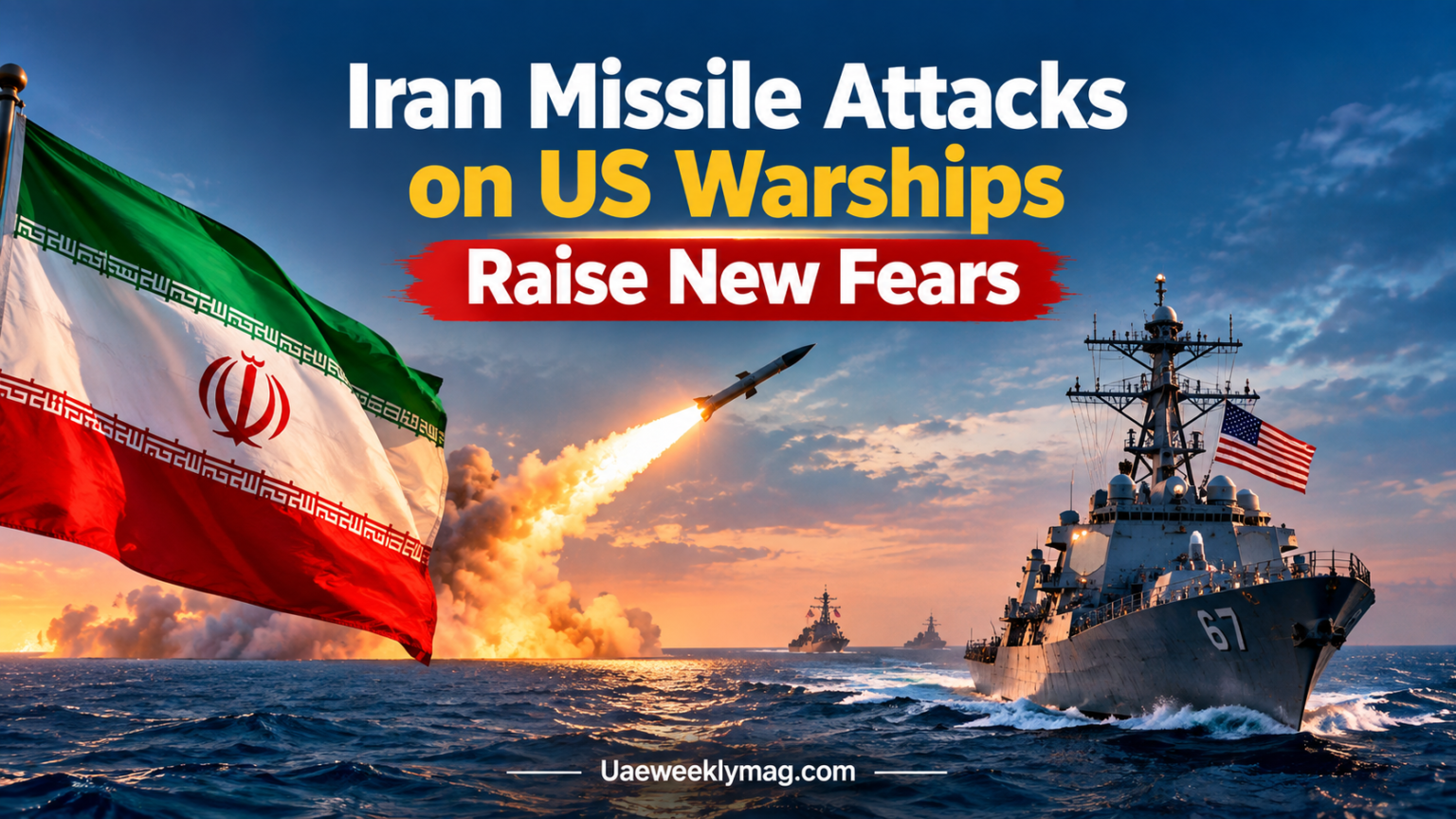
Recent Iran missile attacks on American warships have raised serious concern among military officials. For months, Iran has focused on making the Strait of Hormuz risky for cargo ships. Now, Iran appears to be taking a much bigger risk by firing missiles directly at US Navy vessels.
According to reports, Iranian forces have launched missiles at American ships at least three times in the past week. One of these ships included a large aircraft carrier. Officials say American forces safely avoided each attack.
Why These Attacks Are Different
These recent Iran missile attacks were closer and more concerning than earlier attempts. In the past, hitting a moving ship at sea was very difficult. Missiles usually follow a fixed path, making it hard to hit something that keeps moving.
This time, officials believe Iran may have improved its ability to track and target ships while they are moving. This is a much harder skill than hitting something that stays in one place.
New Missile Technology Raises Questions
Part of the concern comes from the type of missiles being used. Reports say Iran used medium-range missiles with special warheads. These warheads can change direction while flying through the air.
This is very different from older missile designs. Older missiles usually follow one straight path toward a fixed spot. Newer designs can adjust their path, which may help them chase a moving target like a ship.
Iran has spoken about one of its missiles, called Qassem Basir. Iranian officials say this missile has improved accuracy and can strike moving targets. However, it has not been confirmed that this exact missile was used in every recent attack.
How Is Iran Finding Moving Ships
One of the biggest questions right now is how Iran is locating these ships in the first place. Hitting a moving target requires accurate and constantly updated information about where the ship is located.
Some US officials are looking into whether Iran may be receiving help from other countries, such as Russia or China. So far, there is no public proof that either country provided this kind of support.
Even so, this possibility worries American officials. Better tracking tools, like satellite images or shared military data, could make Iranian missiles much more accurate in the future.
Why Iran Is Taking Such a Big Risk
Experts believe Iran is running low on other ways to change the direction of this conflict. A large American naval force has been blocking much of Iran’s oil exports. This has hurt Iran’s economy in a major way.
At the same time, Iran is dealing with a falling currency and rising prices at home. Because of these pressures, some experts say Iran feels it has fewer peaceful options left.
Importantly, Iran does not need to defeat the US Navy to make an impact. Instead, every missile attack forces American ships to defend themselves. This can be costly and stressful, even if the attacks do not succeed.
If you would like to read more about global security topics, check out our Middle East security news section and our Gulf region updates for more coverage like this.
You can also read more background from US Central Command’s official updates for verified military statements on the region.
A Very Dangerous Balancing Act
There is a big difference between firing a missile at a ship and actually causing serious damage. If a missile successfully hit a US ship and caused major harm, it could lead to a much larger military response.
Even so, some experts believe Iran may see value in taking this risk. A successful strike could shake financial markets and create difficult decisions for American leaders.
This situation has become even more sensitive because of political timing in the United States, adding extra pressure to how both sides respond.
Washington has also shown that there are consequences for attacking its ships. After previous missile attacks, American forces targeted Iranian oil tankers in response. Iran then responded by targeting more ships near the Strait of Hormuz and launching missiles at a US base in Jordan.
This back-and-forth has created a dangerous and ongoing cycle between both sides.
What Happens Next
The Strait of Hormuz remains extremely important for global energy trade. Because of this, Iran continues to see the area as a place where it holds strong influence, even while facing serious economic troubles.
Experts say Iran does not need to win a full military battle. Instead, by making the region more dangerous for US ships, Iran may hope to change how the United States approaches its presence there.
As tensions continue, military and political leaders on both sides face difficult choices in the days ahead.
Final Thoughts
The recent Iran missile attacks show how quickly tensions in the region can escalate. With new missile technology and unanswered questions about tracking abilities, the situation near the Strait of Hormuz remains serious and closely watched.
As both sides continue to respond to each other’s actions, the world will be watching closely to see how this dangerous situation unfolds.
Read More : Uae Weekly Mag
Reference By : Gulf News