




Decades of institutional credibility, steady policy-making, and strong international relationships have become one of the UAE’s most powerful economic assets — and the country is now leaning on that trust to fuel its next chapter of growth.
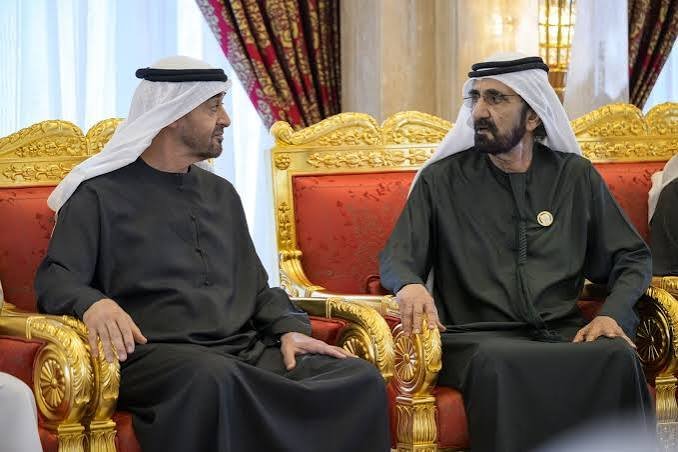
His Highness Sheikh Mohammed bin Rashid Al Maktoum, Vice President and Prime Minister of the UAE and Ruler of Dubai, described the confidence built over decades as the “currency” the nation is now investing in its continued development. That statement lines up with a wave of recent data showing just how much that trust has translated into tangible economic gains.
In 2025, the UAE pulled in a record AED177.3 billion ($48.3 billion) in foreign direct investment. Non-oil foreign trade came close to AED2 trillion in just the first half of 2026. On top of that, the country climbed to fifth place globally in the IMD World Competitiveness Ranking and secured the top spot worldwide for economic performance.
How Confidence Turns Into Capital
Sheikh Mohammed’s framing positions trust not as a vague reputational win, but as a genuine economic resource — one built through reliable governance, functioning institutions, and a predictable business environment.
That link between confidence and capital shows clearly in the UAE’s latest FDI numbers. The country attracted $48.3 billion in inbound investment during 2025, a 6 percent increase year-on-year and its fourth consecutive record year, based on data referencing UNCTAD’s World Investment Report. This performance pushed the UAE up to ninth globally among top FDI destinations.
Total accumulated FDI stock now stands at AED1.171 trillion, while the country recorded 1,562 announced greenfield projects in 2025 alone — making it the world’s second-largest destination for greenfield investment for the third year running.
Greenfield investment spending reached roughly AED125.2 billion, with manufacturing making up 30 percent of that total and communications close behind at 29 percent. Combined, these projects are estimated to have created more than 65,000 jobs. Regional tech-driven investment trends — including major infrastructure projects like the one covered in this Izmir data center development in Türkiye — reflect a similar pattern of countries competing to attract large-scale, future-focused capital.
The UAE’s Growing Share of Regional Investment
The UAE accounted for approximately 38 percent of all greenfield investment spending across the Middle East in 2025, as regional capital expenditure on new projects climbed sharply.
When the investment figures were first announced in July, Sheikh Mohammed noted that the results reflected more than just national strategy — they signaled global confidence in the UAE, its institutions, and its long-term direction.
To build on this momentum, the government is now rolling out its National Investment Strategy 2031, which aims to:
- Raise annual FDI to AED240 billion by 2031
- Grow cumulative FDI stock to AED2.2 trillion
- Support priority sectors through a new National Investment Fund, approved in November 2025 with an initial allocation of AED36.7 billion
Domestic investment tells an even bigger story. Official estimates place 2025 domestic direct investment between $100 billion and $119 billion (roughly AED367–437 billion) — two to two-and-a-half times the value of incoming FDI.
Trade Momentum Adds Another Layer
Trade performance offers a second lens into how global confidence is translating into economic activity. The UAE’s non-oil foreign trade hit AED1.937 trillion in the first half of 2026, up 13.1 percent from the same period the year before.
National non-oil exports grew even faster, jumping 23.9 percent to a record AED452.8 billion. Their share of total non-oil trade rose to 23.4 percent — up from 21.3 percent a year earlier and just 16.9 percent back in 2023, signaling a structural shift toward domestic production and value-added exports.
China remained the UAE’s top trading partner in the first half of the year, with bilateral non-oil trade reaching AED180.7 billion, followed by Switzerland (AED138.4 billion) and India (AED107.5 billion). Sheikh Mohammed pointed to these trade figures in July as clear evidence of the economy’s strength and the world’s continued confidence in the UAE’s development path, a sentiment echoed in broader regional economic coverage from outlets such as Economy Middle East.
Trade Partnerships Widen the UAE’s Global Reach
The UAE’s network of Comprehensive Economic Partnership Agreements (CEPAs) continues to play a central role in its trade strategy. Trade with CEPA partner countries already in force reached approximately AED304.3 billion in the first half of 2026, with UAE exports to those markets totaling around AED66.1 billion.
These agreements are designed to lower tariffs, remove trade barriers, and give UAE-based companies broader access to supply chains across Asia, Africa, and other high-growth regions — reinforcing the UAE’s approach of staying commercially connected across different political and geographic blocs, even amid rising global fragmentation.
Climbing the Global Competitiveness Ladder
The UAE’s investment and trade growth has been matched by a steady rise in international competitiveness rankings. The country placed fifth globally in the IMD World Competitiveness Yearbook 2026 and ranked first worldwide for economic performance.
It topped the charts across 21 individual indicators — including the absence of bureaucracy and adaptability of government policy — and landed in the top five globally across 67 separate criteria. Within the broader competitiveness framework, the UAE ranked in the global top 10 across 118 different indicators.
The country also held onto its title as the world’s leading environment for entrepreneurship, according to the Global Entrepreneurship Monitor 2025/2026 report, marking a fifth consecutive year at the top. It ranked first among high-income economies in areas like government policy, taxation, infrastructure, and entrepreneurship support, and placed second globally for entrepreneurial finance and access to funding.
Resilience Under Pressure Reinforces Trust
The real test of institutional trust often comes during periods of disruption — and 2026 provided exactly that. Despite a noticeably more challenging regional environment, UAE officials reported strong resilience across investment and economic activity.
Saeed Al Hajeri, Minister of State at the UAE Ministry of Foreign Affairs, said in July that approximately 98 percent of foreign investments in the country remained unaffected despite regional and global headwinds. He credited this stability to strong economic fundamentals, deep international connectivity, and the government’s ability to respond quickly to shifting conditions.
Non-oil sectors made up nearly 79 percent of national GDP in 2025, while the UAE’s sovereign wealth assets reached approximately $2.49 trillion — providing significant financial backing. With more than 200 nationalities living and working in the country, the UAE’s economic model remains deeply reliant on the continuous flow of people, capital, goods, and international business activity.
Institutions Built Over Decades Provide Continuity
Officials consistently link the UAE’s resilience to institutions developed over many years. During a Cabinet meeting in March, Sheikh Mohammed emphasized that the UAE’s global relationships and international standing are the product of decades of sustained effort and lasting partnerships with governments and major financial institutions.
At that same meeting, the Cabinet approved more than 120 international agreements and memoranda of understanding spanning energy, investment, diplomacy, and economic cooperation — underscoring the scale of the UAE’s global network.
Two Decades of Transformation
The scale of change becomes clearer when looking back at the past 20 years. Since Sheikh Mohammed became UAE Prime Minister in January 2006, the federal government has issued nearly 16,000 Cabinet resolutions, managed budgets exceeding AED1.1 trillion, and modernized more than 90 percent of the country’s legal framework.
Economically, real GDP grew from around AED918 billion in 2006 to more than AED1.77 trillion in 2024. Non-oil foreign trade rose from roughly AED415 billion to around AED3 trillion over the same period, while non-oil exports expanded from just AED29 billion to AED559 billion.
AI Is Reshaping How Government Operates
Technology has become another pillar of the UAE’s institutional strategy. In May, the government launched a national Agentic AI transformation program, aiming to shift 50 percent of government services and operations to AI-powered models within two years. More than 400 ministers and senior officials took part in the initial planning retreat.
The first wave of government AI agents already covers procurement, tax auditing, customer happiness, and technical support. The Ministry of Cabinet Affairs was reportedly running around 140 Agentic AI assistants on its GovAI platform even before the strategy’s formal rollout, with plans to train all 80,000 federal employees to work alongside AI systems effectively.
Public Trust Remains High Despite Global Fragmentation
The UAE also continued to post strong results in the 2026 Edelman Trust Barometer, even as the global study found trust becoming increasingly fragmented in many other economies. The UAE-specific findings showed notably lower reluctance to trust people from different backgrounds or viewpoints compared to the global average, with government and employers remaining key institutions for bridging societal divides.
This kind of institutional trust matters economically because major investment decisions often hinge on factors that go beyond tax rates or cost calculations — predictability, contract enforcement, and reliable infrastructure all play a role in shaping long-term capital commitments.
The Takeaway
The UAE’s latest economic data — a fourth consecutive record year for FDI, nearly AED2 trillion in non-oil trade within six months, record exports, and a top-five global competitiveness ranking — all point to a country deepening its integration with global capital and commerce.
But these achievements also raise the bar going forward. Hitting the National Investment Strategy’s AED240 billion annual FDI target, expanding CEPA partnerships, and successfully rolling out AI-led government transformation will all depend on the UAE continuing to protect the very credibility that helped attract this capital in the first place.